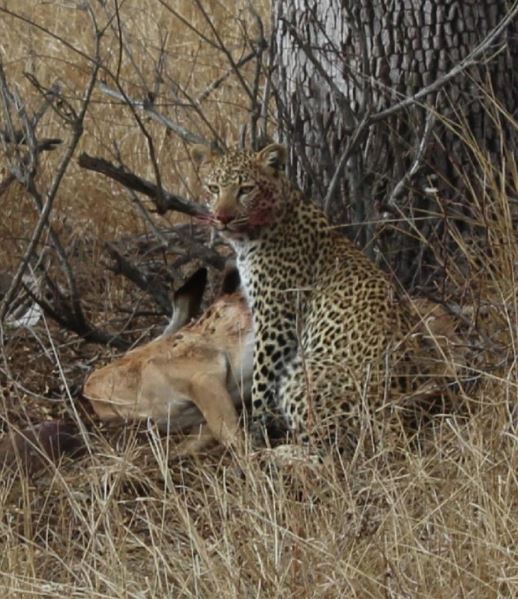
This last week on our full day Kruger Safari we were lucky enough to witness a beautiful sighting of a mother leopard and her cub feasting on a fresh Impala kill.

For many safari enthusiasts, tracking a wild leopard stands as the ultimate bushveld triumph. These magnificent predators possess an iconic reputation for being incredibly difficult to spot in the wild. If you want to maximize your chances of a sighting on your next game drive, understanding their unique survival mechanics and social structures is key.
Here is an inside look at the secretive world of Africa’s most solitary big cat.
The Art of Stealth: Camouflage and Nocturnal Habits
Leopards are master illusionists. Two primary evolutionary traits keep them successfully hidden from both their prey and eager safari onlookers:
- Flawless Dappled Camouflage: A leopard’s coat features beautiful, specialized spots called rosettes. These markings mimic the shifting patterns of light and shadow in dense thickets and leafy tree branches, allowing them to vanish into the scenery completely.
- A Nocturnal Lifestyle: Leopards operate primarily as nocturnal hunters. Because they conduct their heavy patrolling, stalking, and feeding under the cover of total darkness, they spend most of the daylight hours resting silently in deep ridges or high tree canopies.
Leopard Habits At a Glance: • Social Status: Strictly solitary apex predators. • Peak Activity: Nighttime, dawn, and dusk. • Prime Habitat: Riverine forests, rocky outcrops, and large trees.
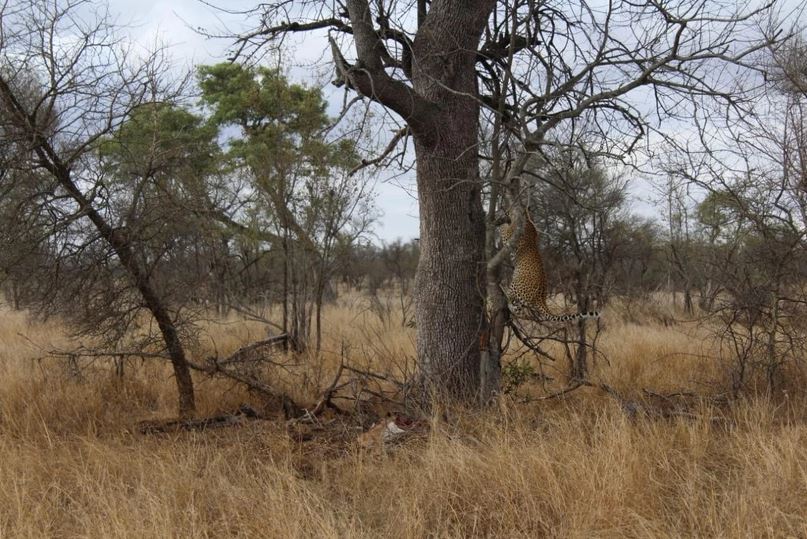
Leopards are incredible climbers and are exceptionally strong. They are known to carry their kills up a tree. This is to prevent any other predator or scavengers such as a lion or hyena from stealing their kill.
Solitary Survivors: Why Leopards Choose to Rule Alone
Unlike highly social lion prides, leopards live as strictly solitary mammals. They actively hunt, patrol, and defend their massive territories entirely on their own. In the leopard world, independence ensures survival, meaning they do not share their food or rely on a group for protection.
In fact, leopards break their solitary rule under only two rare circumstances:
- The Mating Ritual: A mature male and female will briefly come together for a few days to mate before parting ways permanently.
- Raising the Next Generation: A dedicated mother will live with and fiercely protect her vulnerable cubs until they learn to hunt independently.
Track Elusive Big Cats with the Experts
Because finding a leopard requires intense patience and a highly trained eye, heading out with a professional tracking team dramatically increases your odds of a successful sighting. Our expert guides know exactly how to read the alarm calls of birds and monkeys to pinpoint exactly where these ghost-like cats are hiding.
📧 Book Your Safari: To track Africa’s most elusive predators on a custom Kruger Day Safari or an all-inclusive Kruger Package, email our team today at shikwari@rawifi.co.za.
Please follow our social channels here for regular updates.
To connect with us, please get in touch here.